UX Designer

4Season
Cultivate Awarness, Raep Wellbeing
Design Breif
GOAL
Design products/services to encourage/stimulate changes in behavior
towards healthier and more sustainable habits for the person and the environment.
Eating habits
Sedentary lifestyle
Sustainable fashion
Sustainable tourism
Recycling/Reuse
KEY ELEMENTS
Problem definition
Data-driven design
Evaluation of experience in the medium term
THEORETICAL APPROACH
More-than-human design: the project must be developed from a perspective
post anthropocentric.
The concept of the post-Anthropocene that characterizes the “More-than-human” approach does not
it excludes the human being as a fundamental component of the design process,
but it takes the latter as a starting point for framing needs and issues
wider contemporaries and to support a call to action to imagine and
shaping the future.
This involves a deep understanding of needs, preferences,
expectations, inclinations, beliefs and goals of the entire ecosystem in
to which the human being is inserted (other human beings, non-human agents, environment, the
nature, the animals) and the system design (product or service) adapted to these
factors.
METHODOLOGICAL APPROACH
Use of Artificial Intelligence at various stages of the design process:
- User research (Stakeholder analysis, emotional maps)
- Definition (Personas)
- Ideation (Journey maps, scenarios for brainstorming)
- Prototyping (UI)
- Evaluation (Definition of KPIs - Key Performance Indicators)
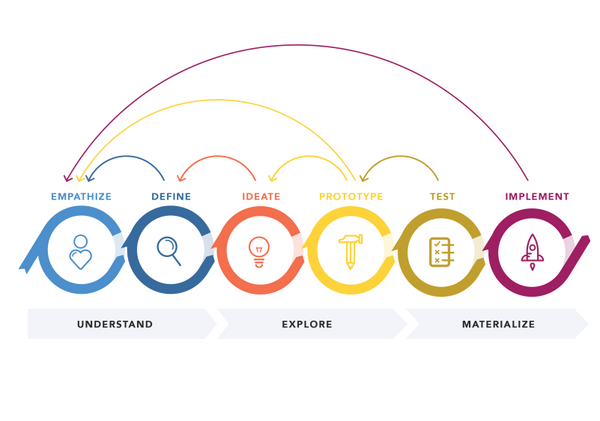
Design process
Understanding the problem
Many people buy fruit and vegetables out of season, with impacts on the environment and well-being.
Respecting the seasonality of products resulting from traditional agriculture brings various benefits.
Benefits of follow fruits and vegetables seasonability:
1. Healthier and tastier products: seasonal products are richer in taste and nutrients
2. Respect for the environment and health:
Local seasonal products must not be transported thousands of km or grown in artificially heated greenhouses, thus reducing CO2 emissions from transport and production
Less packaging and less waste
Respect for the soil and biodiversity: cultivating according to the natural rhythms of the land helps preserve soil fertility and reduce the use of pesticides and chemical fertilizers.
So why do people keep buying fruits and vegetables out of season?
We assume it's because of:
-
Ignorance about seasonality
-
Availability in supermarkets
-
Personal preferences
-
Convenience in knowing how to treat and cook it
Empathize
DESK RESEARCH
Research Methodology
We conducted a comprehensive desk research to understand Italian consumer purchasing patterns, focusing on food shopping behaviors and seasonal consumption habits. The research combined quantitative data from national surveys with behavioral insights from consumer research studies.
Key areas analyzed:
Purchase motivations and decision-making factors
Shopping channel preferences and behaviors
Seasonal consumption awareness and attitudes
Barriers to seasonal eating adoption
Research questions:
What drives Italian consumers' food purchasing decisions?
How do shopping channels influence consumer behavior?
What is the level of awareness regarding seasonal eating benefits?
What prevents consumers from adopting seasonal eating habits?
Key Findings
Purchase Behavior:
Price remains the primary motivator (60% of consumers)
Aesthetic appeal and certifications significantly influence decisions
65% prefer supermarkets, while 25% shop at local markets
Direct sales and cooperatives account for 10% of purchases
Seasonal Eating Awareness:
Only 47% of Italians follow seasonal eating patterns
96% understand the concept but only 92% recognize the benefits
53% prefer seasonal products when available
46% choose fruits and vegetables based on personal taste preferences
Intervention Opportunities:
76% would be more likely to purchase with promotional offers
25% desire apps to easily identify seasonal products
Environmental messaging resonates with socially conscious consumers
The research revealed a significant gap between awareness and behavior, indicating strong potential for targeted interventions to promote seasonal consumption.
(→ Sources: ISTAT, Nielsen, DOXA, Bocconi University research)
USER RESEARCH Digital ethnography & field observation
Research Methodology
We conducted a mixed-method user research combining digital ethnography and direct field observation to understand real consumer behaviors around seasonal food purchasing. The research involved analyzing online discussions and conducting in-store observations at a local market (Conad City) to capture authentic user interactions and decision-making processes.
Key areas investigated:
Shopping behaviors and decision-making patterns
Information-seeking habits regarding seasonal products
Barriers to purchasing seasonal fruits and vegetables
The disconnect between online discourse and actual behavior
Research questions:
How do consumers actually behave when shopping for fresh produce?
What information do people seek about seasonal products online?
What are the real-world obstacles to seasonal eating adoption?
How does digital behavior translate to physical shopping actions?
Digital Ethnography Findings
Online Information Seeking:Users frequently ask for guidance on finding reliable seasonal product information
Strong interest in understanding nutritional benefits of seasonal eating
Concerns about where to source quality seasonal produce
Discussion threads reveal confusion about seasonal timing and availability
Health vs. Sustainability Disconnect
Health content completely disconnected from environmental sustainability
Users focus primarily on nutritional benefits rather than environmental impact
Limited integration between wellness practices and sustainable consumption values
Field Observation Results
Actual Shopping Behaviors:Strong attraction to comfort foods over fresh seasonal options
Price perceived as the primary evaluation criterion
Convenience drives purchasing decisions more than seasonal awareness
Barriers Identified:
Fear of unfamiliarity with new/seasonal products prevents experimentation
Convenience preference leads to frozen/processed alternatives
Impulse purchases often influenced by product positioning on shelves
Positive Insights:
Genuine interest in seasonal products exists among shoppers
Dedicated seasonal sections in stores attract customer attention
Opportunity for motivational messaging and educational interventions
Key Implications
The research revealed a critical gap between online interest in healthy, seasonal eating and actual shopping behaviors. While consumers express desire for seasonal products digitally, real-world barriers including convenience preferences, price sensitivity, and lack of knowledge create obstacles to adoption. This presents clear opportunities for design interventions that bridge the digital-physical divide.
personas

Define
ecosystem map

user's journey map

How might we encourage Giulia to choose seasonal fruits and vegetables by making information accessible, engaging, and timely during the shopping experience?
Ideation
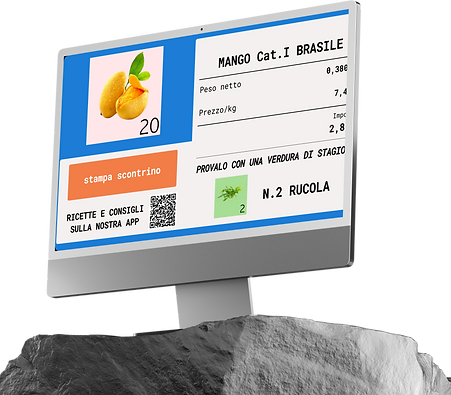
1. Libra
.jpg)
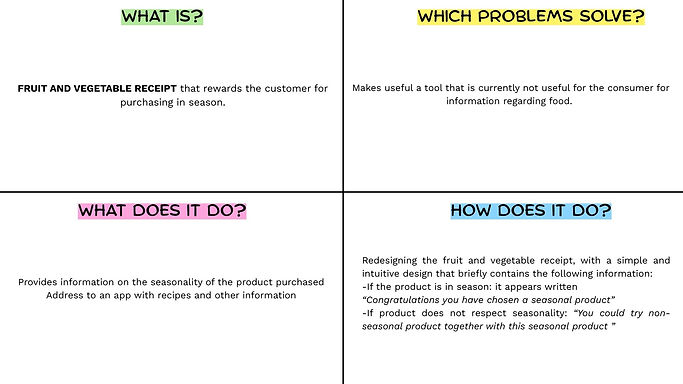
2. receipt
.jpg)
3. app
.jpg)



Test
Methodology
I conducted comprehensive usability testing to evaluate the proposed app solution for seasonal product awareness. The testing combined UEQ (User Experience Questionnaire) evaluation with qualitative semi-structured user interviews to assess both quantitative usability metrics and in-depth user perceptions.
UEQ Scale Evaluation
Attractiveness: Overall impression and visual appeal
Clarity: Ease of understanding and familiarization
Efficiency: Task completion with minimal effort
Reliability: User control and predictable system behavior
Stimulation: Engaging and motivating interaction
Novelty: Innovation and creativity assessment
Key Research Questions
Do users find the interface visually appealing and engaging?, Can users easily understand the app's functionality?, Does the app effectively communicate seasonal product benefits?, What emotions does the receipt messaging feature evoke?Would users integrate this app into their regular shopping routine?.
Results- Quantitative Findings (UEQ Scale) The prototype has been tested with Maze. Partecipants number : 12
100% of participants would use the app regularly in their shopping routine,
High scores across all UEQ dimensions, particularly in novelty and stimulation
Users found the concept innovative and potentially very useful
Results-Semi-structured Interview
Paolo, 27: Found the seasonal advice display as a secondary interface useful, but noted it might be too information-heavy. Suggested focusing on the "proceed to selection" feature without excessive detail to maintain user attention and avoid overwhelming product-focused shoppers.
Beatrice, 22: Appreciated the potential utility for those unfamiliar with seasonal availability. However, expressed concerns about discount-driven messaging on receipts potentially appearing promotional rather than educational. Suggested the receipt feature might feel too commercial.
Marco, 28: Would use it primarily to research which fruits and vegetables are in season, viewing it as a simple reference tool. Observed that the scale interface effectively communicates nutritional information and seasonal timing.
Stefano, 64: Considered the app highly useful, especially for gaining seasonal knowledge that was more common in previous generations when living in rural areas. Appreciated the educational aspect but noted that receipt messaging might not be easily readable for older users.
Key Insights & Implications
Universal willingness to adopt the app indicates strong market potential
Users recognized clear value in seasonal education and guidance
The interface successfully balances information density with usability
Design Refinement Opportunities
Receipt messaging needs careful calibration to avoid appearing overly promotional
Information architecture should prioritize core functionality over comprehensive details
Accessibility considerations for different age groups require attention
The testing validated the core concept while identifying specific areas for design optimization before final implementation

I think it could be useful for people but that receipt message is too small... - Stefano, 64
Results & Take away
Our comprehensive research revealed a significant gap between awareness and behavior in seasonal eating habits among Italian consumers:
High Awareness, Low Implementation
-
96% of Italians understand the concept of seasonal eating
-
92% recognize its benefits
-
Only 47% actually follow seasonal eating practices regularly
Primary Barriers Identified
-
Economic factors dominate purchasing decisions (53% prioritize promotions over seasonality)
-
Personal taste preferences override seasonal considerations (46%)
-
Limited knowledge about nutritional properties (only 30% have in-depth vegetable knowledge)
-
Convenience takes precedence over sustainability values
Our three-pronged approach (Smart Scale, Enhanced Receipt, Mobile App) addressed these barriers with promising results:
User Acceptance
Users found the app aesthetically pleasing and well-organized
Interface clarity received positive feedback across age groups
Innovation factor was recognized by test participants
Functionality was intuitive and easy to understand
Behavioral Insights
76% of respondents would be more likely to buy seasonal produce with specific promotions
25% expressed interest in an app to easily identify seasonal products
Users appreciated gratification messaging on receipts but noted readability issues
The "empty fridge" recipe feature resonated particularly well with users
Takeaways
1. Bridge the Awareness-Action Gap The research confirms that knowledge alone doesn't drive behavior change. Our solution addresses this by providing actionable information at the point of decision-making, reducing cognitive load during shopping.
2. Leverage Existing Touchpoints By redesigning familiar interfaces (scales and receipts) rather than introducing entirely new tools, we minimize adoption barriers and integrate seamlessly into existing shopping habits.
3. Integrated Offline-Online Ecosystem Required The research demonstrates that sustainable behavior change requires continuous support across the entire food purchasing journey. Users need offline touchpoints (smart scale and enhanced receipt) to make informed decisions in-store, combined with online support (mobile app) for meal planning, recipe discovery, and food management at home. This hybrid approach ensures users receive contextual guidance at each decision point, from initial product selection to final consumption. Without this seamless integration, users fall back on convenience-driven habits that prioritize familiar products over seasonal alternatives.
Limitations
The user testing was conducted with a small sample of participants, which limits the generalizability of our findings. The feedback, while positive, may not represent the full spectrum of user behaviors and preferences across different demographics, geographic regions, and shopping contexts. A larger-scale study would be necessary to validate these initial insights and identify potential edge cases or resistance patterns.
Consideration
-
Consider gamification elements to maintain engagement
-
Develop partnerships with retailers for promotional tie-ins
-
Create community features to leverage social proof